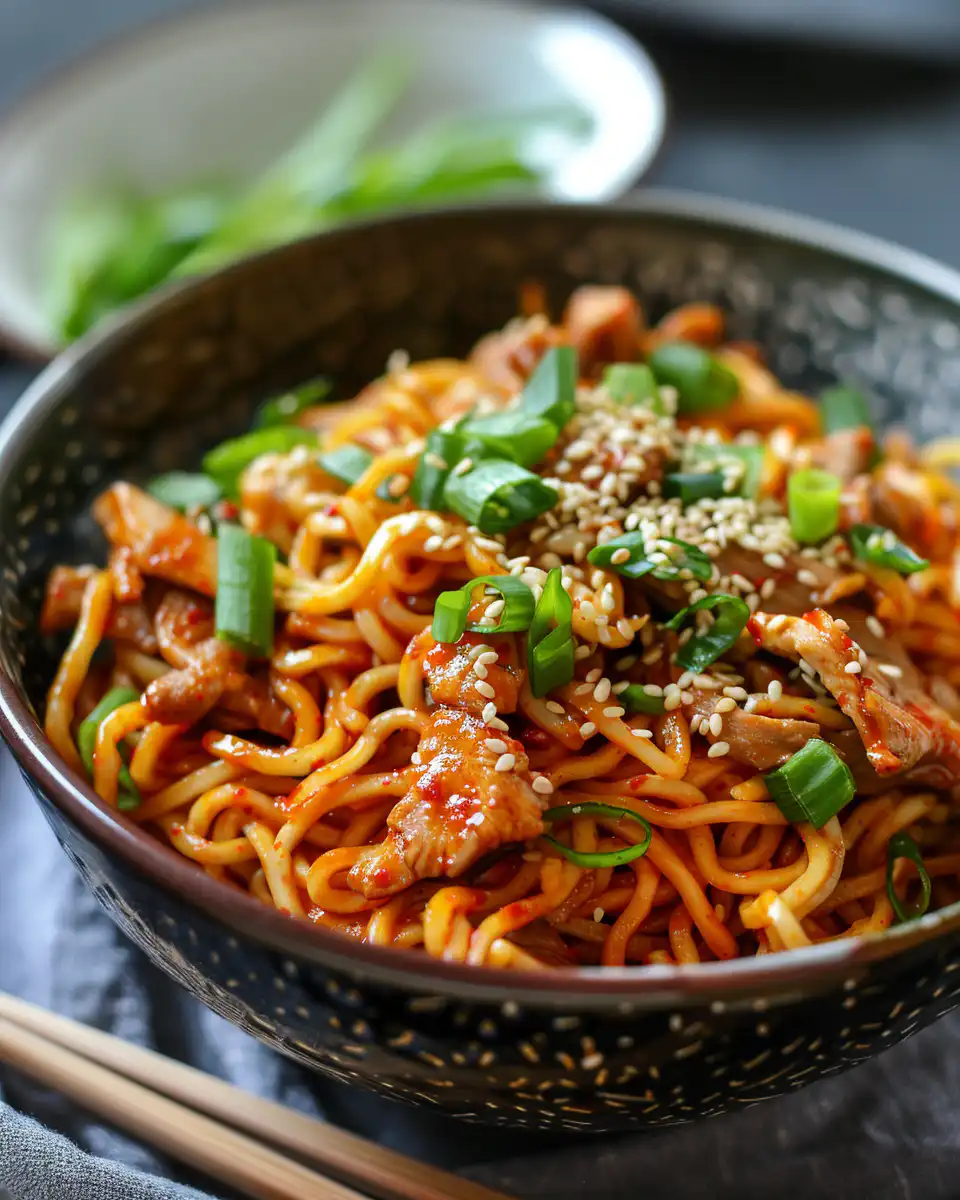
You are standing in your tiny city condo kitchen at six pm The doorbell rings but you trust the hiss of the pressure valve more than a doorbell A craving sneaks in for some Korean Gochujang Noodles with Pork and you can almost taste that bold spicy kick Your mind jumps to that pot on the stove and the thought of blending sweet gochujang sauce with tender pork and noodles feels like exactly what you need That moment sparks an all in one pot meal cook mission
Your fridge shows a sad stack of cabbage and a lonely onion You kind of panic til you spot a packet of noodles and some sliced pork You wonder how to jam flavor fast Then you remember your trusty lid and that little steam valve on your cooker You press it in quick release mode so you can eat sooner and later you do a slow release to deepen broth depth You squeeze the handle til steam escapes
You load pork bits noodles and gochujang paste into your pot You add a splash of soy sauce vinegar and garlic then hit simmer The pot hums under your watch it feels like it reads your mind You set a timer you walk away and you can almost taste that sweet spicy noodle bowl You come back do a quick release you stir in scallions and sesame seeds and then dig right in That first bite makes you grin and you promise yourself more of these midweek wins
Why pressure wins hearts bullets five to seven
- It makes noodles cook in minutes not hours so you get dinner on the table faster when you are starving and tired
- It locks in steam so those pork bits stay juicy and that sauce soaks in deep flavor each spoonful you scoop
- You can control steam in your electric pressure cooker or instant pot with quick release or slow release for perfect texture each time from firm bite to soft broth
- You save space by cooking noodles pork and sauce all in one pot so cleanup feels easy after a long day
- The pressure valve gives you a hint when it builds enough steam depth so you know you nailed the broth every batch
- You feel dang proud when you hear that hiss and see how that gochujang sauce melts into pork bits so richly
- That sealed lid is like a coach yelling at you for every ingredient to mingle so your noodle bowl tastes bold and well blended
Ingredient kit rundown eight to ten items
Here is your ingredient round up for that Korean Gochujang Noodles with Pork feast You got all you need except maybe a fearless appetite
- Pork shoulder or pork belly cut into bite size pieces to give your dish a rich texture and meaty flavor
- Fresh or dried noodles you can pick ramen noodles udon or rice noodles depending on your mood
- Gochujang paste this gives spice sweet and tang and is the heart of your spicy noodle recipe
- Low sodium soy sauce for a balance of salt that lets the gochujang shine without overpowering
- Rice vinegar adds a little zing that cuts through the heat for that perfect taste
- Garlic cloves minced or grated to give your sauce a nice pungent kick
- Sesame oil just a drizzle for that nutty aroma and shine on your noodles
- Green onions chopped fine for a pop of color and a fresh bite at the end
- Brown sugar or honey a spoon or two to tame the heat and bring a hint of sweetness
- Water or broth about two cups to create that deep broth depth so your noodles soak up rich flavor
With these ten elements you are all set to rock that pot and whip up your Korean Gochujang Noodles with Pork
Step timeline inside the pot six to eight
- Step one Warm up your pot on that saute setting with a splash of oil Throw in your pork bits stirring often until they brown a little and give off that meaty aroma that says you are on the right track while you watch the steam gauge for hints
- Step two Toss in garlic cloves and sliced onions stirring gently until they smell sweet Then spoon in gochujang paste and soy sauce stirring until it coats every meat piece in a red glaze so you get a thick bold sauce clinging to each bit
- Step three Pour in water or broth to cover ingredients most of the way That extra liquid gives you that deep broth depth and helps noodles cook evenly under all that steam pressure stir gently then check your valve gauge til it clicks or til it reaches high pressure so you know to close the lid
- Step four Arrange your noodles in a soft pile submerging them in the liquid It helps them cook all the way through as the pot builds pressure without leaving raw bits then gently press them down with a spoon so they dont float up and stay half cooked Keep your eye on steam but avoid popping the lid
- Step five Close your lid until it clicks then move that little valve to sealing Switch to the pressure cook setting and set the timer for two minutes which gives a firm bite Or if you want extra soft noodles go three minutes but dont walk away too long
- Step six When timer rings use quick release to let steam out fast or slow release if you want a little extra cooking time Listen for that hiss and step back so you avoid drips Hold a towel near valve so steam does not surprise you
- Step seven Open the pot lid til all steam is gone then stir in a drizzle of sesame oil chopped green onions and a pinch of brown sugar for balance before you dish it out It looks inviting as it steams
Shortcut valve tricks three to five
Here are a few pressure valve hacks to boost your speed and avoid steam burn
- Use quick release for noodles when you want a firm bite and slow release for when you want more tender texture That shift in steam pressure gives you control over chew and that perfect springy feel without mush
- Lock your lid then wiggle valve gently to test pressure If you hear a hiss you are near ready and can adjust timer by a half minute or so to avoid over or under cooked noodles
- After cooking give a splash of cold water on pot lid to chill the metal and help force a fast steam release It tricks the valve so you get an instant drop in pressure without messing up your timing
- Stack a trivet under your pot when you do slow release to avoid drips into your counter This also keeps your surface safe under all that steam and makes cleanup a snap
First spoonful story
You sit down only to realize next door neighbor walks by looking hungry You wave back but you already have your spoon ready That first scoop of Korean Gochujang Noodles with Pork steals your breath The noodles are firm enough but soak up all that sauce You catch the steam and taste that perfect balance of sweet and heat in every slurp
Your cheeks warm as you share a laugh with neighbor who tastes a drop on their finger They say dang that is good You smile proud Who knew a few bits of pork garlic and gochujang with quick release trick could taste so dang good
You pull back and realize your kitchen was full of spice and you barely used more than one pot and one spoon You promise to let your friends in on this cheat day kind of wonder recipe And you know you will do slow release next time for extra broth depth
Leftover jar guide
You end up with a jar full of leftover Korean Gochujang Noodles with Pork ready to rock your next meal You grab a wide mouth jar let it cool a bit then ladle noodles pork and sauce into it You leave about half an inch at top so lids seal well
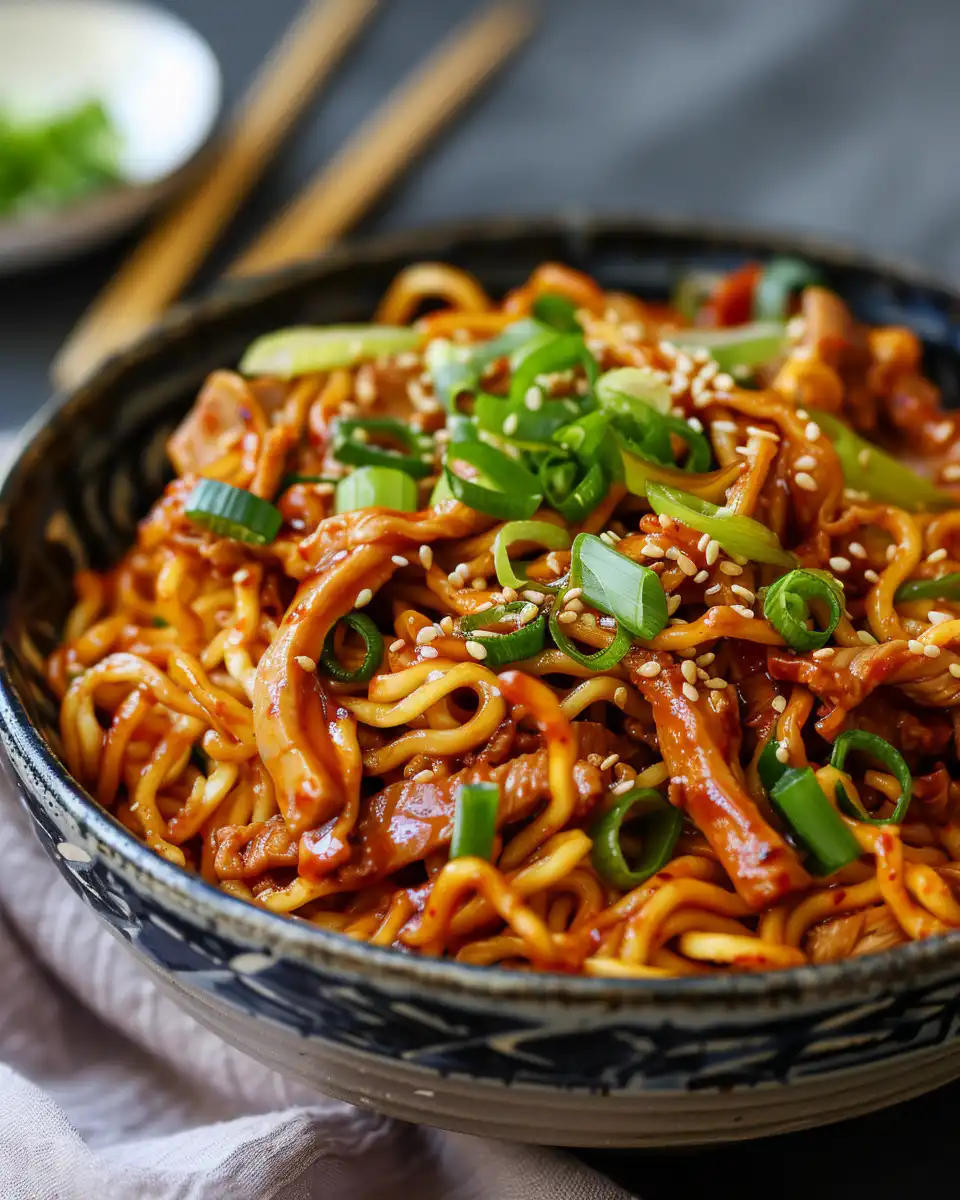
Slide that jar in fridge for up to three days or stash in freezer up to a month Always label it with date so you keep track of freshness When you open jar the sauce will smell even richer because it got time to mingle
To reheat give it a quick warm up on saute mode or microwave for a minute If you use pot add a splash of water or broth stir in quick release like you did before so it loosens That steam will bring it back to life
You can also empty jar in a bigger wok toss in fresh veggies or an egg for a quick stir fry Or spoon leftover into a steaming bowl top with kimchi or a soft egg for fancy vibes Your jar guide keeps dinner ever ready
Feel good send off with six FAQs
How can I make this vegetarian instead of pork? You can swap tofu or mushrooms for the pork bits Press tofu to firm it up then cube and brown in saute mode The mushrooms will soak in gochujang sauce nicely for that same umami rich feel you love
Can I use other kinds of noodles besides the ones I chose? Totally you can pick ramen udon rice or even soba noodles Just adjust the timing by a minute if they cook fast Keep an eye on steam gauge and use quick release earlier to avoid mush
Why did my noodles turn too soft or mushy? That happens when they stay under pressure too long or get over gentle release Try cutting timer by thirty seconds or switch to quick release as soon as the count ends It gives you more control over noodle chew
How do I make it extra spicy or mild to my taste? You can tweak spice by adding more gochujang paste or a pinch of chili flakes for extra heat For a milder finish stir in a spoon of honey or brown sugar before serving to tame the burn
Can I prep parts of this recipe ahead of time? Sure you can mix sauce gochujang soy sauce sugar and vinegar into a jar and store it in fridge Chop pork and green onions in advance Then just dump everything in your pot when you are ready cook
What sides go best with these gochujang noodles? An easy choice is kimchi salad or quick pickled cucumbers A soft boiled egg on top gives you creamy yolk that blends into sauce Or grab a simple slaw of cabbage for crunch and color that balances the heat
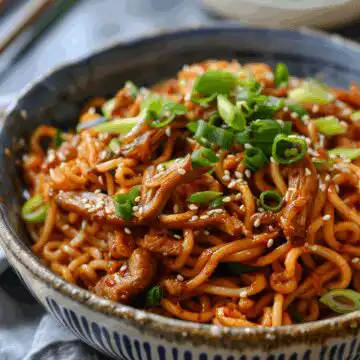
Korean Gochujang Noodles With Pork
Equipment
- 1 large pot
- 1 skillet or wok
- 1 colander
- 1 measuring cups and spoons
Ingredients
- 12 oz fresh or dried noodles (udon or ramen)
- 1 lb pork tenderloin or pork shoulder, thinly sliced
- 2 tablespoons gochujang (Korean chili paste) Adjust spice level to taste.
- 1 tablespoon soy sauce
- 1 tablespoon sesame oil
- 1 tablespoon vegetable oil
- 4 cloves garlic, minced
- 1 teaspoon ginger, minced
- 1 cup bell peppers, sliced (any color)
- 1 cup carrot, julienned
- 2 green onions, sliced for garnish
- 1 tablespoon toasted sesame seeds for garnish
- to taste salt and pepper
Instructions
- Cook the noodles according to package instructions in a large pot of boiling water. Drain and set aside in a colander.
- In a mixing bowl, combine the gochujang, soy sauce, sesame oil, minced garlic, and minced ginger. Mix well to form a marinade.
- Add the sliced pork to the marinade, and let it sit for 10 minutes to absorb the flavors.
- Heat the vegetable oil in a skillet or wok over medium-high heat. Add the marinated pork and cook for about 5-7 minutes, or until browned and cooked through. Remove the pork from the skillet and set aside.
- In the same skillet, add the sliced bell peppers and julienned carrots. Stir-fry for about 3-4 minutes, or until they are slightly tender yet still crisp.
- Return the cooked pork to the skillet with the vegetables. Add the cooked noodles and stir to combine everything. Season with salt and pepper to taste.
- Serve the noodles hot, garnished with sliced green onions and toasted sesame seeds.