Childhood ember memory
You might recall that warm evening when your grandma lit that old stove and set a pot of water on it to boil. You watched those tiny flames flicker under the pan and thought about how simple things feel dang special when they glow like embers. That first time you tasted creamy pesto pasta it felt like a hug from the kitchen itself.
The scent of basil and pine nuts hit you as soon as she spooned that bright green sauce onto the noodles. You leaned in close so the steam could warm your face and make you forget about homework you still had to do. Every after school snack starts to seem humdrum once you've had that vivid flavor dancing on your tongue.
Years later you still remember how that sauce clung to every strand of pasta just like the way you cling to good mem'ries. Even if you cook on a fancy cooktop now you'll always think back on that sneaky ember glow and the first bite of creamy pesto pasta that changed the way you cook forever.
Fire craft plain words science
When you heat water to cook pasta you're working with energy moving through metal and water molecules. Hot burner meets pan meets liquid till the temperature climbs and bubbles rise. It's steady then lively. You control that dance by sliding a knob in or out.
Pasta cooks better when you drop it into a rolling boil so starch leaches out and water soaks in. That process makes each piece swell just right. Once you drain it you'll notice the texture and feel under your fingertips.
Blending oil with fresh basil in a blender or mortar is chemistry too. Fat carries flavor molecules that water cant grab. That's why combining cream or olive oil with basil spread and parmesan makes it cling to every noodle.
Pantry grains and spice list six to eight items
- italian pasta of choice like fettuccine or penne
- fresh basil leaves
- toasted pine nuts or walnuts
- grated parmesan cheese or romano
- minced garlic cloves
- heavy cream or half and half
- extra virgin olive oil
- sea salt and freshly ground pepper
You can swap pine nuts for walnuts if you feel like it or use a mix of parmesan and pecorino for extra tang. Make sure your garlic is fresh so you get that zing you love.
Dough knead ritual steps
If you want to go full artisanal you can even make fresh pasta dough. You just mound some all purpose flour on a clean counter then crack in a few eggs and add a pinch of salt. Press with your hands until it all pulls together.
Work that dough by pushing and folding it for about five minutes or till it feels smooth. It might seem like a pain but you build gluten that gives pasta a tender chew. If the dough feels too sticky add a little more flour or dust your board so nothing clings.
Once it's smooth wrap it in plastic or cover it with a damp towel and let it rest. That rest helps the proteins relax so when you roll it out you get silky sheets instead of rubber bands. It's kinda neat to watch raw dough bloom into something you can shape.
When it's rested cut that dough into rough ribbons or feed it through a pasta roller to get uniform strands. Dust each batch lightly with flour so they dont stick together.
Rising dough aroma scene
As that dough rests you'll notice a mild sweet smell start to rise. It's not fully fermented like bread dough but you still get a subtle wheat scent that hints at what's about to happen. Leaves of basil in a bowl on the counter add a fresh green aroma that lifts the room.
You might wander away for a bit to prep garlic and cheese then come back to find the pasta dough blanketed in a light film of moisture. It feels alive. Pull back the cloth and breathe it in. That light scent gets you ready to roll.
Flip and char checkpoints
Bring a big pot of water to a hard boil then drop your fresh pasta or dried noodles in. Stir once so they don't stick. You're aiming to cook till they feel just tender under your teeth. That's called al dente and you'll know it when you bite one and it gives a little.
While pasta cooks turn your attention to the skillet or food processor. Pour in olive oil then add basil garlic and nuts. Pulse or swirl till it looks like a fine paste. Then stream in cream and cheese as you go. Taste as you add salt and pepper so it clings to your tongue just right.
When pasta is ready drain it but save a cup of water. Toss noodles back in pot or skillet then pour in sauce. If it seems too thick splash some of that pasta water till it coats every strand in a glossy finish.
Smoke kiss notes
You can up the depth by adding a small drizzle of toasted olive oil or a few drops of smoked oil. That gentle smokey whisper plays off the fresh basil and creamy cheese. It feels like you fussed but it only took a sec.
A light sprinkle of micro greens or a few basil shreds on top gives a fresh crisp note. You'll taste the bright green leaves one bite then that dreamy cream and cheese right after.
Shared platter touches
Slide that creamy pesto pasta onto a large platter so everyone can scoop their share. You might add whole basil leaves or a handful of pine nuts on top for crunch and color. A quick grind of pepper over the mound makes it look dang appetizing.
You'll notice folks lean in for seconds because bright green always stands out. Serve with a wedge of lemon on the side so people can squeeze a little juice if they want a sharper edge to the creaminess.
Seasonal stuff twist
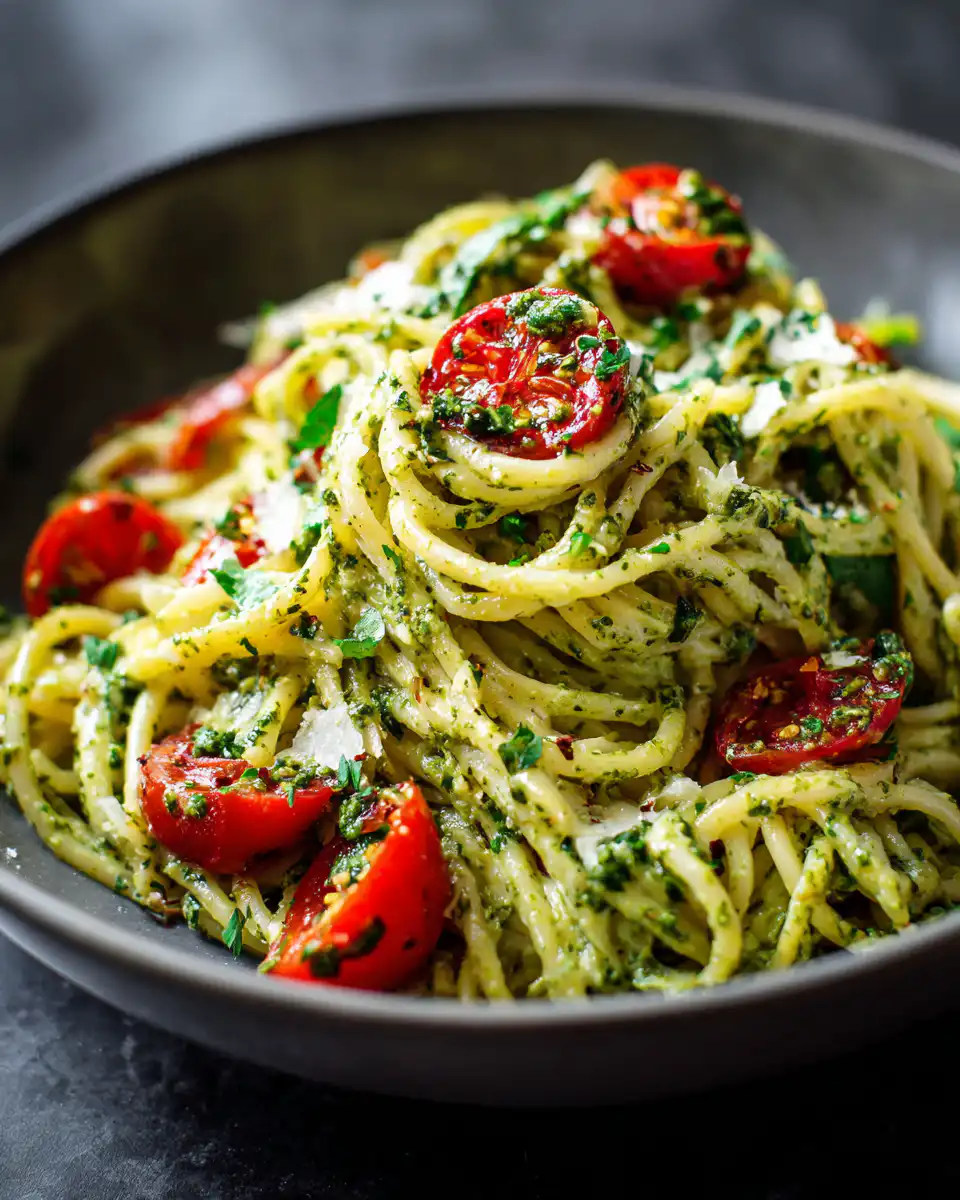
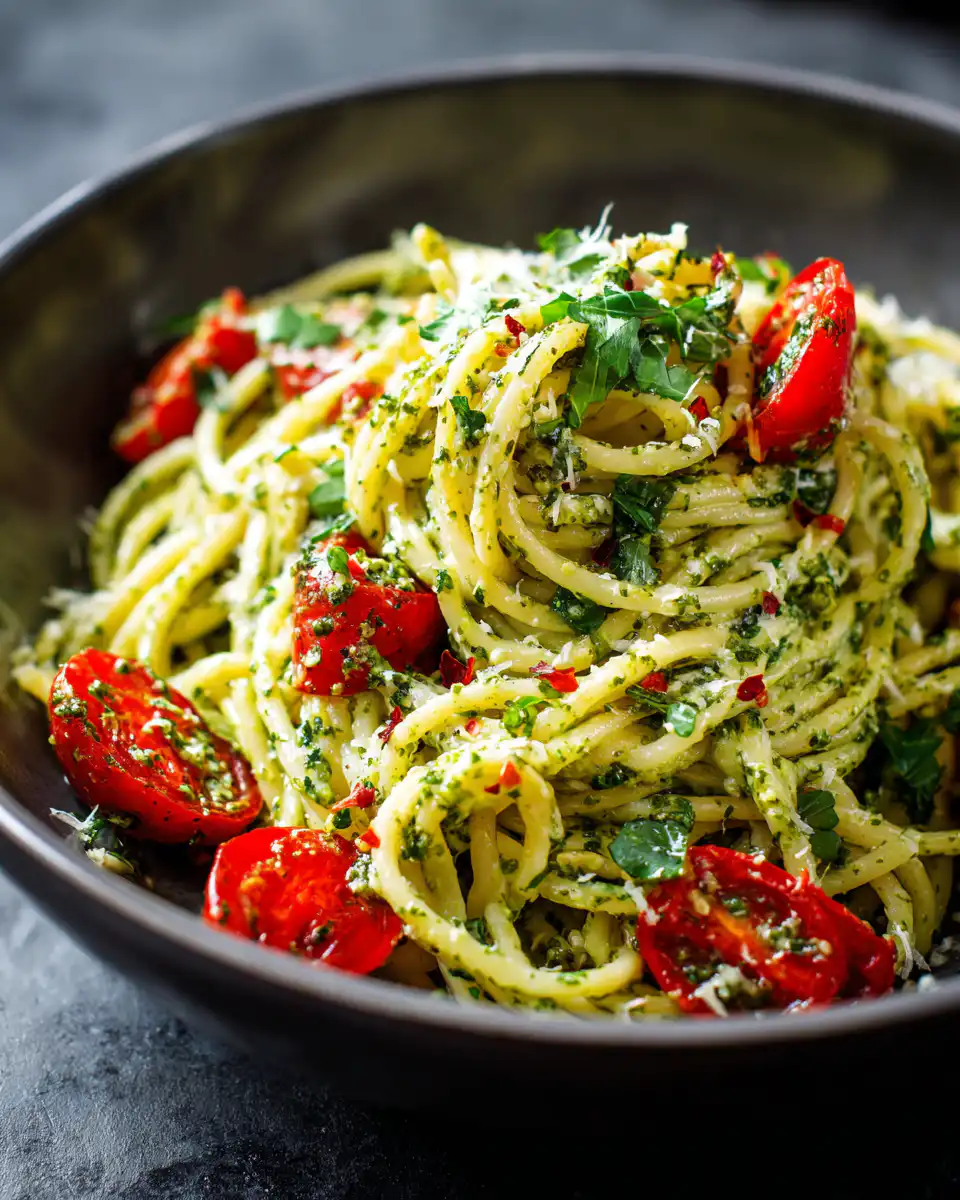
In summer toss in halved cherry tomatoes or barely wilted spinach leaves. In fall stir in roasted squash cubes for sweet earth notes that pair with the basil.
Winter calls for a sprinkle of crisp pancetta bits or tiny broccoli florets that soak up the sauce. You can even fold in thawed peas for a sweet pea pop on each forkful.
Store reheat love guide
If you have leftovers dont just nuke it dry in the microwave. Heat a small skillet low and add a splash of cream or water then toss in pasta. Stir slow till sauce loosens and coats noodles again. You get a silky texture just like day one.
Alternatively you can reheat in a pot set over low heat with a bit of olive oil or butter. Stir gently so nothing sticks and watch that sauce shine as it warms. Dont let it boil hard or you risk breaking the cream and losing that clingy pesto coat.
You can also freeze portions in airtight containers. When you thaw them it helps to add a little extra cheese or cream so the texture stays lush.
Family toast and Questions and Answers
You've poured your heart into every swirl of that green sauce and each twist of pasta. Now raise a glass or cup and give yourself a little cheer for cooking from scratch. You've turned simple pantry items into a creamy pesto pasta feast.
Q What kind of pasta works best
Any shape you like really but fettuccine penne or farfalle hold sauce well.
Q Can I use store bought pesto
Sure you can but fresh pesto blended with cream and cheese gives a lighter taste.
Q How long will leftovers keep
Stored in fridge they stay good for three days if you seal them tight.
Q Can I make vegan creamy pesto pasta
Use cashew cream or coconut cream and nutritional yeast instead of cheese.
Q Why save pasta water
That starchy water helps emulsify sauce so it sticks like a dream.
You're ready to share that bowl of green with yall and watch faces light up.
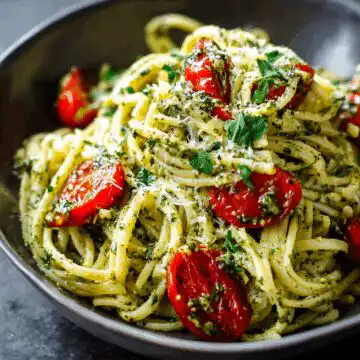
Creamy Pesto Pasta
Equipment
- 1 large pot for boiling pasta
- 1 colander for draining pasta
- 1 large skillet or frying pan
- 1 mixing spoon
- 1 measuring cups and spoons
- 1 blender or food processor for homemade pesto, optional
Ingredients
- 12 oz pasta Your choice, like penne or fettuccine.
- 1 cup heavy cream
- 1 cup prepared basil pesto
- 1 cup grated Parmesan cheese
- 2 tablespoons olive oil
- 2 cloves garlic, minced
- to taste salt
- to taste black pepper
- fresh basil leaves, for garnish Optional.
Instructions
- Bring a large pot of salted water to a boil. Add the pasta and cook according to package instructions until al dente. Reserve about 1 cup of the pasta water, then drain the pasta in a colander.
- In a large skillet over medium heat, add the olive oil and minced garlic. Sauté for about 1-2 minutes until the garlic is fragrant, being careful not to burn it.
- Reduce the heat to low and add the heavy cream to the skillet. Stir well to combine, then let it warm through for about 2 minutes.
- Add the prepared basil pesto to the creamy mixture and stir until well incorporated.
- Gradually mix in the grated Parmesan cheese, stirring continuously until the cheese melts and the sauce becomes smooth. If the sauce is too thick, gradually add some reserved pasta water until you reach your desired consistency.
- Add the drained pasta to the sauce, tossing gently to coat the pasta evenly. Season with salt and black pepper to taste.
- Serve immediately, garnished with fresh basil leaves and additional Parmesan cheese if desired.