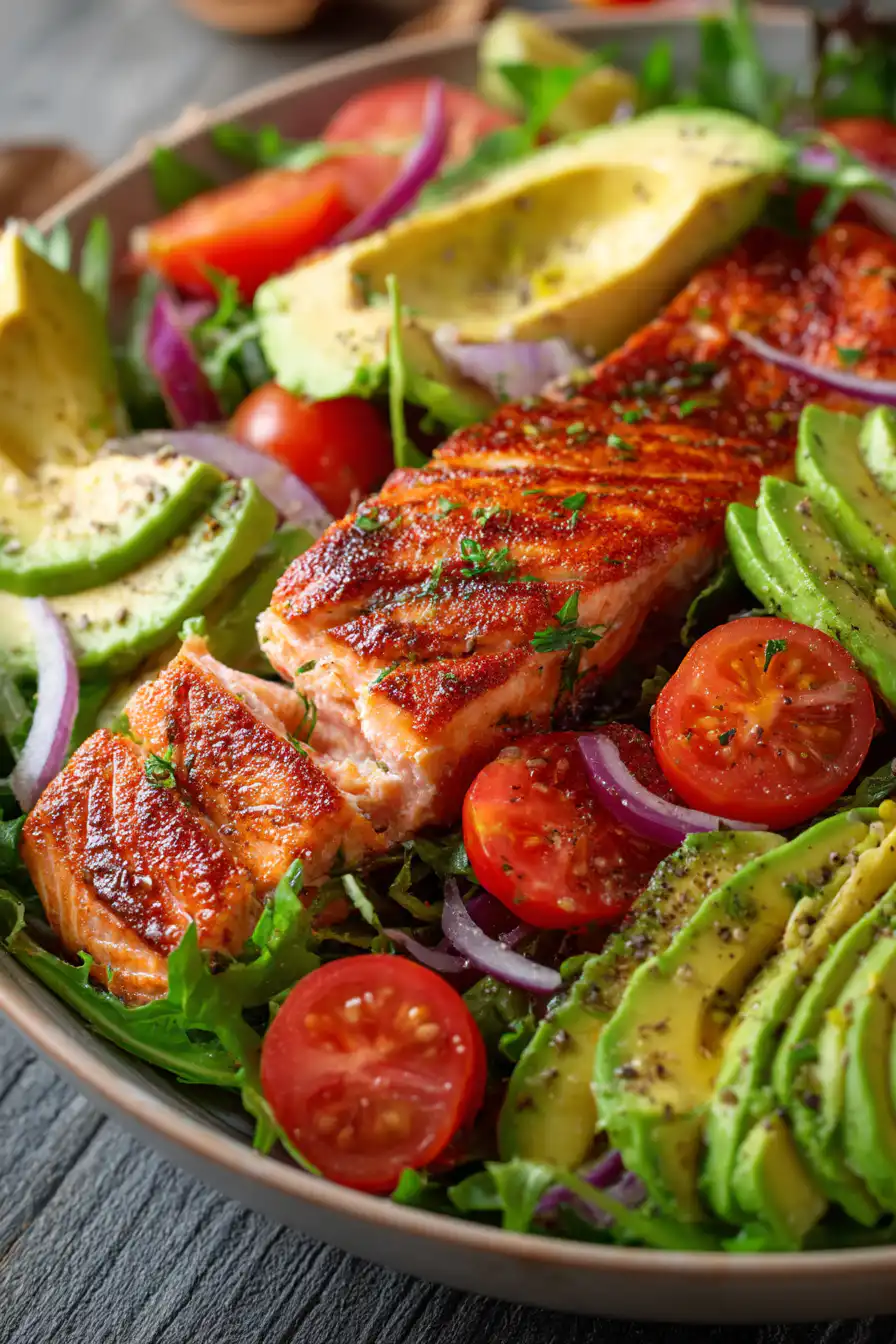
Salmon avocado salad is getting more popular every day, and it's not hard to see why. It's a mix of smooth avocado and tender salmon that not only tastes amazing but is also good for you in many ways. Whether you're having it for lunch, dinner or as a side, this salad works in any setting and is loved by people who really care about healthy eating.
Salmon and avocado are both packed with nutrients that help keep you well. Salmon is super famous for its omega-3 fatty acids, which can help your heart, brain, and even lessen inflammation. Avocados, on the other hand, are loaded with one kind of healthy fat called monounsaturated fats and lots of fiber. This means they help with digestion and keep you feeling full longer. Together, they make a salad that not only tastes good but also gives you a healthy boost.
One great thing about salmon avocado salad is that you can change it to fit different diets. Even if you need gluten-free, paleo or you're trying to cut back on meat, you can tweak this salad. By adding other proteins or different seasonal veggies, you can make a version that suits your taste while still keeping that awesome salmon and avocado flavor.
1. Health Benefits of Salmon
Salmon isn't just tasty, it's also really good for you. Its omega-3 fatty acids are important for keeping your heart and brain in good shape. These fats can help to cut down on inflammation in your body and even lower the risk of some diseases. Plus, salmon is full of high quality protein which is great for building muscle and helping your body repair itself after doing activities.
Other than omega-3 and protein, salmon also gives you a bunch of vitamins and minerals. It has a lot of B vitamins that help with energy making and brain power, and selenium, a powerful antioxidant that helps protect your cells from damage. All these nutrients make salmon a top choice for anyone wanting a healthy meal.
1.2 Benefits for Heart Health
The omega-3 fatty acids in salmon are real winners when it come to heart health. Studies have shown that these fats help lower cholesterol by reducing triglycerides and boosting good HDL cholesterol. They also help keep your blood vessels working well and can lower the chance of heart problems.
Eating salmon regularly might even help lower your blood pressure and cut down the risk of blood clots, which is good news for your heart. Adding salmon to your meals is a tasty way to take care of your heart.
1.3 Nutritional Comparison: Wild vs. Farmed Salmon
When pickin salmon, you might wanna think about where it come from. Wild-caught salmon usually has more omega-3 fats than farmed salmon. Wild salmon eats a natural diet that's full of these fats, while farm-raised ones might have less because of the kind of food they get.
Another thing to think about is how each type affects the environment. Wild salmon are often better for nature than farmed salmon, since intensive fish farming can lead to overfishing and pollution. Buying sustainable salmon is a way to eat great while looking out for the planet.
2. Health Benefits of Avocado
Avocado is often seen as a superfood, and pretty much rightfully so. Its nutritional profile is really impressive. The healthy fats in avocados, mainly the monounsaturated fats, are good for your heart and can help lower the bad cholesterol. They also give you a good amount of fiber, which makes digestion easier and helps keep your blood sugar even.
Besides the fats and fiber, avocados have lots of vitamins and antioxidants. They are a good source of vitamin E, which helps protect cells, vitamin C for a stronger immune system, and vitamin K which is important for blood clotting. All these goodies, mixed with healthy fats, make avocado a perfect food for a balanced diet.
2.2 Benefits for Heart Health and Weight Management
Not only do avocados help your heart, they can also help when you're trying to manage your weight. Adding avocados to your meals can improve cholesterol levels and make you feel fuller for longer. This can keep you from snacking too much on less healthy food later on.
The creamy texture of avocados makes them a great addition in many recipes like salads, smoothies, or just on toast. They keep you satisfied and loads of nutrients without adding any junk fats.
2.3 Versatility in Diets
Avocados fit pretty much any diet because they're so versatile. They work great in vegan or vegetarian diets by offering good fats and essential nutrients without any animal products. They're naturally gluten-free and even match up with paleo diets, so lots of people can enjoy them.
You can slice them, blend them, or mix them in your salad. Their flexibility means you can always try new ways to add avocados to your meals while still keeping the health benefits.
3. Key Ingredients in Salmon Avocado Salad
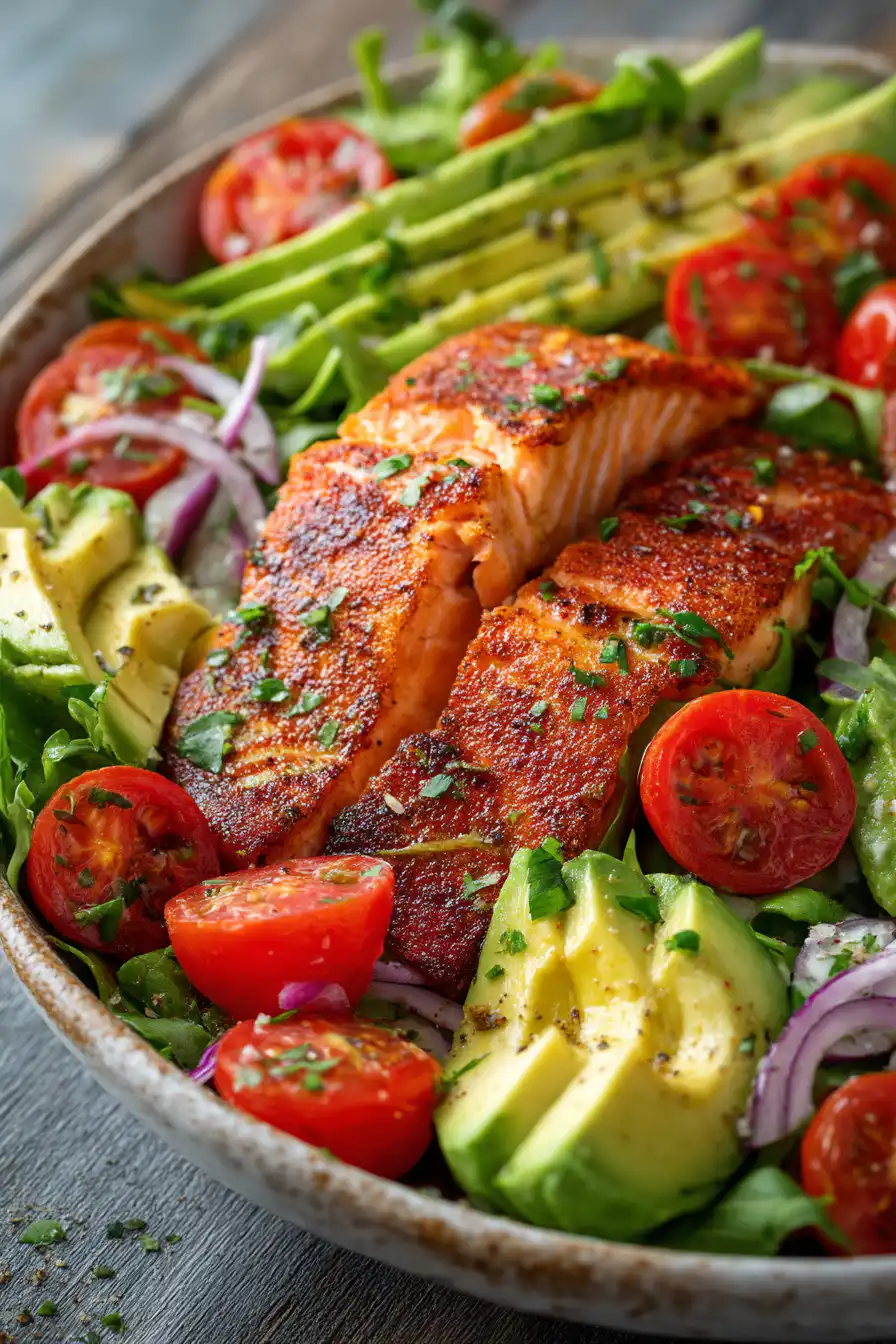
Making a tasty salmon avocado salad means choosin the right ingredients to get the best flavor and nutrition. Below are the most important parts of this colorful dish that helps balance taste and texture.
3.1 Fresh Salmon
When it comes to salmon, you gotta decide between wild-caught and farmed. Many folks think wild-caught salmon has a better flavor and more omega-3 fatty acids. Freshness is also key because it affects the taste big time. Look for salmon with a bright color and that fresh, ocean-like smell. When it's cooked just right, it adds a soft, flaky texture that goes really well with the creamy avocado.
3.2 Avocado
Picking the right avocado is super important. A ripe avocado should be a bit soft to the touch and have a nice deep green color. If it's too hard, it won't work well in your salad, and if it's too mushy then it could ruin the texture. Slice the avocado just before you serve the salad to keep it fresh and stop it from turning brown.
3.3 Additional Ingredients
To make your salmon avocado salad even more awesome, think about addin some fresh vegetables. Good choices include:
- Mixed greens: Spinach, arugula, or baby kale make a great healthy base.
- Cherry tomatoes: They add a sweet pop of flavor.
- Cucumber: Gives you a nice, cool crunch.
- Red onion: For a little bit of a sharp kick.
You can also toss in some herbs and spices to boost the flavor. Fresh dill or cilantro can make the dish smell great, and a little salt and pepper goes a long way. For dressings, a simple lemon vinaigrette or a creamy yogurt one works perfectly with the salmon and avocado.
4. Detailed Recipe for Salmon Avocado Salad
4.1 Ingredients
- Fresh salmon (about 4-6 oz per serving)
- 1 ripe avocado
- Mixed greens (like spinach or arugula)
- Cherry tomatoes (cut in half)
- Cucumber (sliced)
- Red onion (thinly sliced)
- Olive oil
- Lemon juice
- Salt and pepper
- Optional: feta cheese, nuts, or seeds
4.2 Directions
Preparation
To prep the salmon, choose how you wanna cook it: grilling, baking, or pan-searing. If you're grillin, make sure to preheat your grill and oil the grates a little. Season the salmon with salt and pepper then grill for about 6-8 minutes on each side depending on how thick it is. If baking, preheat your oven to 400°F (200°C), put the salmon on a baking sheet, season and bake for 12-15 minutes. For pan-searing, warm some olive oil in a skillet over medium heat and cook for about 4-5 minutes on each side. Take it off the heat when the salmon flakes easily with a fork.
Salad Assembly
While your salmon is cooking, chop up your veggies and prepare the avocado. Cut the avocado in half, take out the pit, and scoop out the flesh into small pieces. In a big bowl, mix the greens, cherry tomatoes, cucumber, and red onion. Fold the avocado in right before serving so it doesn't turn brown.
Dressing Preparation
For a quick lemon vinaigrette, whisk together olive oil, lemon juice, salt, and pepper in a small bowl. Give it a taste and adjust the seasonings if needed. Alternatively, mix plain yogurt with lemon juice, salt, and some fresh herbs to make a creamy dressing.
4.3 Serving Suggestions
Lay the salad on a big plate or in bowls, and put the cooked salmon on top of the greens. Drizzle your dressing over it, and if you want, sprinkle some feta cheese or nuts for extra crunch. Garnish with fresh herbs or lemon wedges if you like. This dish also goes well with a cold glass of white wine or some iced tea.
4.4 Storage Tips
If you got leftovers, put them in an airtight container in the fridge. It's best to keep the salad and dressing apart until you are ready to eat. Try to enjoy the salad in 1-2 days so the salmon and avocado stays fresh.
5. Variations and Substitutions
5.1 Protein Options
If you're not a fan of salmon, you can use other proteins to make your salad tasty. Grilled chicken or tofu are great choices that still keep it light and healthy. You could even try shrimp or tempeh if you want something different.
5.2 Vegan Adaptation
For a vegan twist on this salad, swap the salmon for chickpeas or lentils. They still give you a good dose of protein and keep the salad just as filling without using any animal products.
5.3 Seasonal Variations
Mix in fruits and veggies that are in season to change up your salad. In the spring, you might add asparagus or radishes, while in the summer, fresh corn or peaches can make it sweeter and more colorful. During fall and winter, try roasted root veggies or even some citrus segments to give it a refreshing kick.
6. Common Mistakes to Avoid
6.1 Overcooking the Salmon
Make sure not too cook your salmon so that it stays tender and full of flavor. A good rule is to cook it until it flakes easily with a fork. Using a meat thermometer can help-look for a 145°F (63°C) reading at the thickest part.
6.2 Ripe vs. Unripe Avocados
It is very important to pick a ripe avocado. An unripe avocado might be too hard to cut and mess up the salad. On the other hand, an overripe avocado can get all mushy. Give it a gentle squeeze; it should give in just a little if it's just right.
6.3 Balancing Flavors
Be careful to not overwhelm the delicate flavors of the salad. Use salt wisely and don't under-dress it either; the dressing should make the flavors pop, not hide them. Taste as you go and adjust things so everything is balanced.
7. FAQs
7.1 What is the best salmon to use for the salad?
The best salmon is usually wild-caught because of its higher omega-3 content and richer flavor. But if wild salmon isn't available, fresh or sustainably farmed salmon can do the trick too.
7.2 Can I make the salad in advance?
You can prep most of the salad ahead of time, but its best to add the avocado and dressing right before serving. This keeps them fresh and stops the avocado from browning. Store the parts separately in the fridge in airtight containers.
7.3 What can I add to make it more filling?
If you need a more filling salad, think about adding grains like quinoa or farro, or even more proteins like chickpeas or hard-boiled eggs. Nuts and seeds can also help you feel full longer.
7.4 Is salmon avocado salad gluten-free?
Yes, it is naturally gluten-free. Just be careful to check that any dressings or extra ingredients you add are also gluten-free, especially if they come from a package.
7.5 Can I use canned salmon for this salad?
Yes, you can use canned salmon if you want a quicker option. Just pick a good quality one that comes packed in water or olive oil, drain it well, and check for any bones if you want a smoother texture.
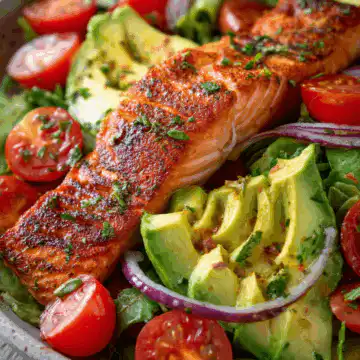
Salmon Avocado Salad
Equipment
- 1 grill pan or skillet
- 1 mixing bowl
- 1 whisk
- 1 cutting board
- 1 serving plates
Ingredients
- 1 lb salmon fillet
- 2 ripe avocados
- 4 cups mixed greens e.g., spinach, arugula, romaine
- 1 cup cherry tomatoes halved
- ½ cucumber sliced
- ¼ red onion thinly sliced
- ¼ cup olive oil
- 2 tablespoons lemon juice
- to taste Salt
- to taste Pepper
- 1 tablespoon fresh dill optional
Instructions
- Preheat your grill pan or skillet over medium-high heat. Lightly season the salmon fillet with salt and pepper.
- Cook the salmon for about 6-7 minutes on each side, or until it is cooked through and flakes easily with a fork. Remove from heat and let it cool slightly.
- While the salmon is cooling, prepare the dressing by whisking together olive oil, lemon juice, salt, and pepper in a mixing bowl.
- In a large mixing bowl, combine the mixed greens, cherry tomatoes, cucumber, and red onion.
- Once the salmon has cooled, flake it into bite-sized pieces and add it to the salad mixture.
- Cut the avocados in half, remove the pit, and scoop out the flesh. Slice the avocado and add it to the salad.
- Drizzle the dressing over the salad and gently toss to combine, ensuring all ingredients are evenly coated.
- Serve immediately on plates, garnishing with fresh dill if desired.