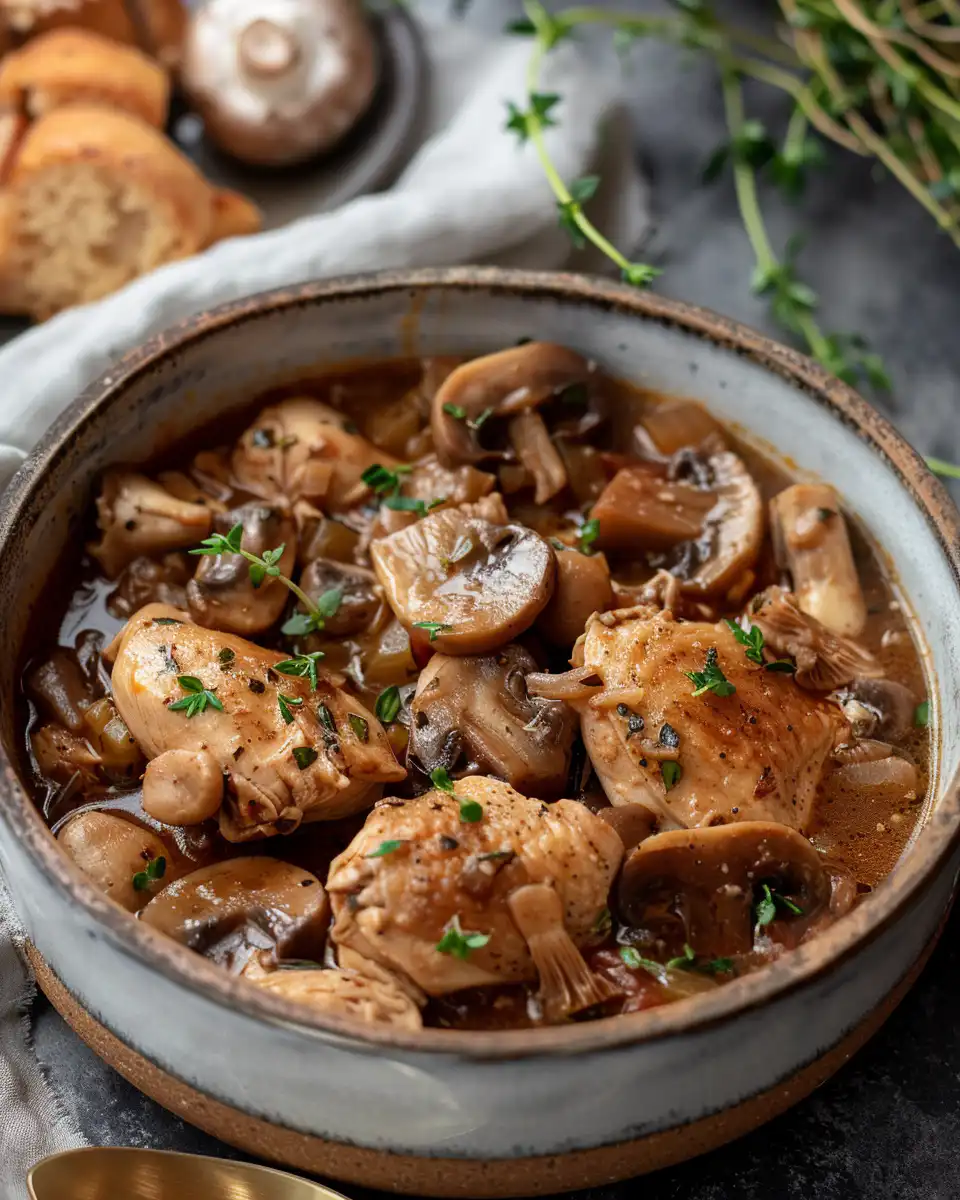
I can still feel the heat of that early night by the camp flame as if it were burning right now. The glow hugged my face while I watched my grandpa stirring a pot of Chicken Mushroom Stew on the iron grate above the live coal. I was just a kid with dirt under my nails and excitement in my eyes. I didnt even mind the sparks popping in my hair since they felt like tiny fireworks dancing around.
I crouched down so close I thought I could touch those embers but instead I got a whiff of smoky garlic butter and tender chicken chunks simmering in that big old pot. Every so often a mushroom floated up like a small boat carrying a drop of juice that tasted like home. My heart raced when he said to reach out and grab a piece of crusty bread from the fire.
That night shaped the way I remember cooking. The crackle of heat and scent of herbs threw me right back years later whenever I light a flame in my backyard tandoor or wood fire oven to get a taste of that first wonder. I hope you feel that glow in your bones as you read this and think about your own ember memories.
Fire craft plain words science
When you build a fire you need a strong base of kindling like dry sticks leaves and small twigs. Those bits let you get a flame going without too much fuss. Once you see orange flicker you feed in bigger logs until you get live coal glowing deep in the center.
Those coals hold steady heat they dont flare up like fresh flames. They give you a more even temperature to simmer a stew or toast bread just right. For a Chicken Mushroom Stew that means slow steady heat so collagen breaks down and fat melts into broth.
Heat moves three ways conduction radiation and convection. When you stir your pot on that live coal you feel conduction through the metal handle. Radiation warms your hands before you even near the flame. Convection churns hot air under the lid so your ingredients bubble and marry in just the right way.
Add a dash of fat or oil and you get protein char where chicken edges brown and mushrooms caramelize. That small char gives you flavor that you really taste. Science sure can be plain but it helps you get that perfect simmer for a stew that feels like home.
Understanding this fire craft plain words science helps you trust your instincts when you cook and tweak heat for every step in your recipe.
Pantry grains and spice list six to eight items
Before you dive in grab the basics from your pantry. You need a few grains herbs and spices to build a flavor base. Youll find it is simpler if you line them up before you start so you dont scramble while that stew is simmering. I like to spread things out on the counter so it feels like a little workshop right in my kitchen.
- long grain rice or pearl barley for serving that soaks up broth
- dried thyme for earthiness
- dried rosemary for a bright pine note
- garlic powder for quick garlic flavor
- onion powder to add sweet depth
- sweet paprika for color and gentle warmth
- sea salt for seasoning that ties it all together
- black pepper fresh cracked if you can
Some folks like to toss in a pinch of red pepper flakes or even a bay leaf if they have it. You can swap barley for rice or leave out an herb if youre low. The goal is to have a handful of building blocks for the stew so you can focus on stirring and tasting. With those on hand youre almost ready to start the simmer for a Chicken Mushroom Stew that feels hands on and satisfying.
Dough knead ritual steps
In a bowl whisk together two cups of all purpose flour one teaspoon of salt and a packet of active yeast. Add about three quarters cup of warm water and a drizzle of olive oil. Use your fingers to bring everything together until the mixture forms a shaggy mass that holds loosely and doesnt stick like glue to your bowl.
Turn that mass onto a floured surface and start folding it over itself. Push with the heel of your hand and fold back. Spin it a quarter turn and repeat. Youll feel it tighten and grow smoother. Dont rush ahead youll miss the chance to feel the dough bloom under your touch as gluten develops.
After about ten minutes youll have a soft elastic ball with a slight sheen. Place it in a lightly oiled bowl and cover with a damp cloth. Let it sit in a warm spot until it doubles in size. That build up of gas creates the dough bloom scent which is a clue that youve done it right.
Punch it down gently and fold the edges into the center. Shape it into a round or an oval. Let it rest for a few more minutes so it can relax before final shaping. That rest makes it easier to roll or stretch without snapping back.
Transfer the shaped dough onto a board or hot skillet if you plan to bake with live coal or over a fire pit. Keep a close watch on the bottom so you catch the moment when it puffs and you get delightful protein char. Then flip and repeat until you have golden spots all over.
Rising dough aroma scene
As the dough rests it fills the air with a yeasty smell that is downright cozy. It reminds me of cool mornings when my grandma would open a window to let in a bit of breeze and that scent would roam the house. You might catch a hint of vanilla if your yeast is extra fresh or a slight tang from overnight fermentation.
Close your eyes and breathe it in like a good friend greeting you after a long day. That aroma is a sign that bubbles are alive inside. Soon you will punch down and feel the soft give under your fingertips. It is like every breath the dough took turns into flavor for your stew night.
Flip and char checkpoints
Slip your flatbread or skillet base onto a hot surface and wait a bit. Youll know the temp is right when tiny bubbles pop up across the dough bloom like little heat craters. That is the first checkpoint. If its browning irregularly lower the heat and give it a minute longer since you dont want black bits but that perfect caramelization.
Time to flip when the bottom gets golden spots and it lifts easily. Use a spatula or tongs if you have em otherwise a firm hand will work. After the flip you look for protein char spots on the upper side those little dark dots that taste dang good. Thats the second checkpoint. Dont let it go too long or itlll go from char to burnt in a heartbeat.
When youre happy with both sides pull it off and let it rest on a rack or plate. Repeat the process for each piece. Keep that heat even by moving coals or adjusting your pan so you get consistent results. Soon youll nail the timing and yeild flatbreads that pair darn well with Chicken Mushroom Stew.
Smoke kiss notes
When you cook over open flame or toss wood chips onto hot coals you give your food a kiss of smoke. That smoky note lifts the earthy mushrooms and chicken in your stew bringing depth that you can almost taste as a gentle haze in each bite. I like to drop in a small hickory chip bag for a quick burst of smoke right at the end.
Dont go overboard or youll lose the stew balance. A little smoke kiss is all you need. Stir it in and let it rest for a minute before you serve. The aroma floats up when you tilt your spoon and makes each mouthful feel like it was cooked by a storyteller around a camp fire.
Shared platter touches
Picture a big rustic bowl at the center of your table with steaming Chicken Mushroom Stew inside. Ladle out chunks of tender chicken mushrooms and broth into smaller bowls but leave that main pot on the table so folks can help themselves. I like to set it on a wooden board to contain any drips and add a few fresh sprigs of parsley on top.
Place a loaf of the flatbread from earlier or a stack of crusty dinner rolls right beside the stew. Use small dipping bowls for extra olive oil or a dollop of sour cream. That little bit of tang makes every spoonful feel fresh and bright. Dont forget a few napkins since things can get fun and messy.
Food tastes better when shared. Encourage everyone to pass bowls around. Let them ladle in as much or as little broth as they like. Its a hands on moment that breaks down barriers and turns a meal into a memory.
Seasonal stuff twist
Each season brings its own twist to a classic stew. In cool fall nights I like to toss in roasted squash or pumpkin cubes for sweetness that plays nice with the savory chicken mushrooms. A sprinkle of nutmeg or cinnamon warms the spirit and nods to autumn harvests.
In spring I swap barley for fresh peas and add a handful of chopped asparagus at the end for crunch. Summer means fresh thyme and basil plucked from the garden along with cherry tomatoes that pop in the broth. Winter evenings call for dried mushrooms or root veggies like parsnip for heartiness. Youll find its easy to riff on the stew base and keep it feeling new.
Store reheat love guide
If youve got leftovers youre in luck. This stew tastes even better the next day after flavors mingle overnight. Store it in an airtight container in the fridge. Youll notice the broth thickens a bit so you might want to stir in a splash of water or stock before reheating.
When youre ready for round two heat it gently on the stove over medium low heat. Stir every few minutes so it warms through evenly. Dont crank the heat or youll risk overcooking the chicken or scorching the bottom. Taste and adjust salt and pepper as the flavors mellowed during storage.
You can also reheat by spooning into oven safe bowls and placing them in a low oven around one hundred seventy degrees Celsius or about three fifty Fahrenheit. Cover loosely with foil so the top doesnt dry out then let it heat for ten minutes or until bubbles appear at the edges.
Right before serving you might add a knob of butter or a drizzle of olive oil to revive that glossy sheen. A few torn parsley leaves on top keep it bright. Enjoy it just like the first night only with a bit more comfort in each spoonful.
Family toast and FAQs
Gather round the table raise your mugs and bowls and let us celebrate the simple power of a good stew. I raise mine to the nights spent by fire the laughter shared while it bubbled and the comfort it brings when the world feels a little off. May every spoonful remind us of our roots and the warmth we make with our hands and hearts.
Below are some common questions folks ask about Chicken Mushroom Stew
- Why does my stew taste bland Sometimes you need to boost the salt or add a splash of acid like vinegar or lemon juice It wakes the other flavors right up
- Can I use dried mushrooms Yes soak them in warm water until soft then drain and toss the soak liquid into your stew for extra umami
- How long will leftovers keep You can store in the fridge up to three days or freeze portions for up to three months Thaw overnight and reheat gently
- Is it safe to reheat more than once Its best to only reheat once to keep safety and texture just right
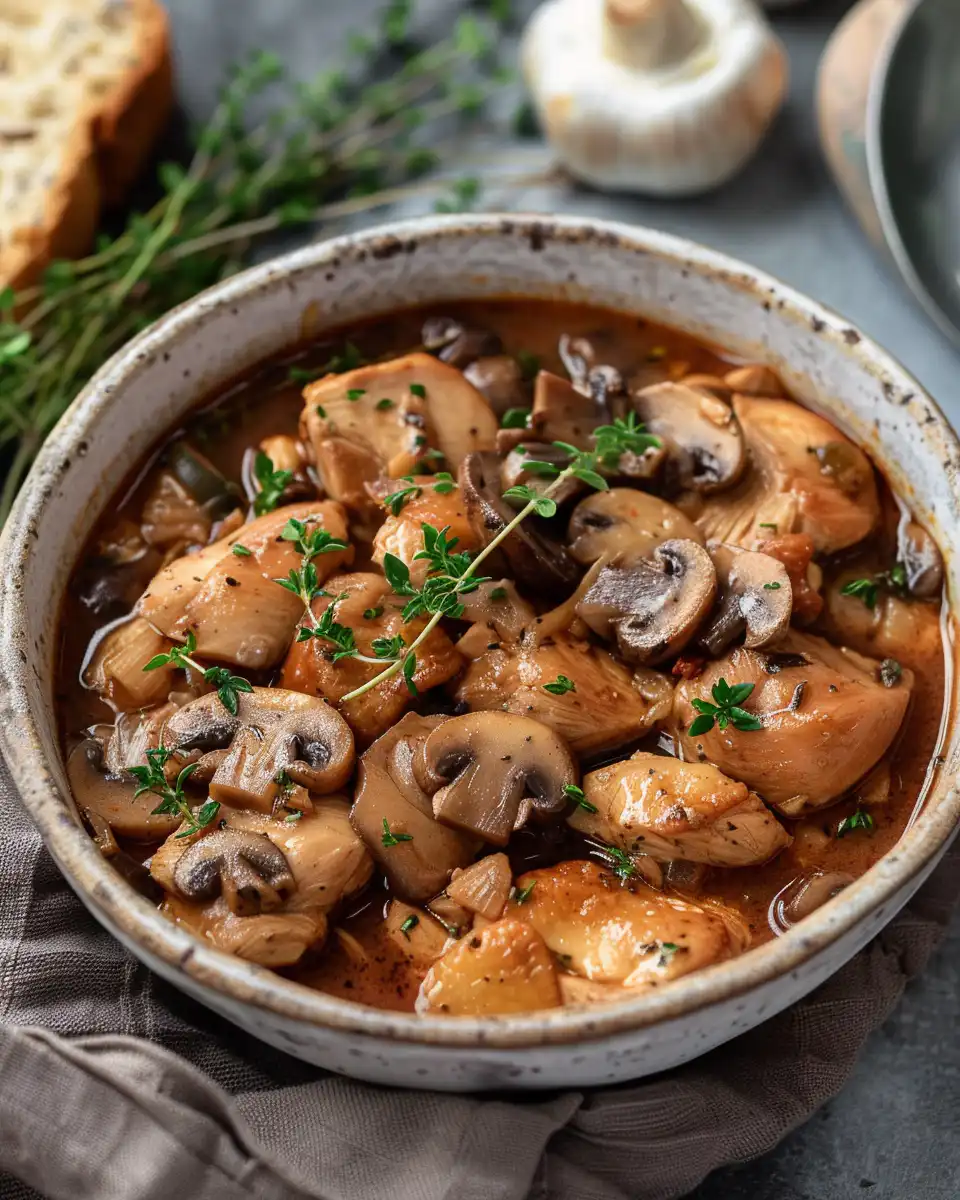
There you have it. A hearty Chicken Mushroom Stew made by fire with a pinch of spontaneity and those wood fire cousins like live coal dough bloom and protein char that whisper smokiness into every bite. Now pass that spoon and dig in.
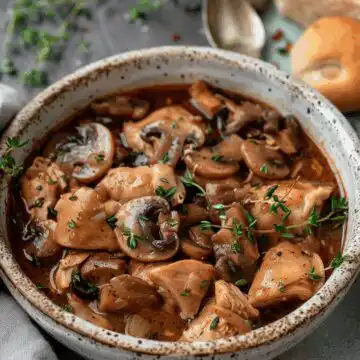
Chicken Mushroom Stew
Equipment
- 1 large pot or Dutch oven
- 1 cutting board
- 1 sharp knife
- 1 wooden spoon
- 1 measuring cups and spoons
Ingredients
- 1.5 lbs boneless, skinless chicken thighs cut into bite-sized pieces
- 2 cups mushrooms sliced, any variety
- 1 medium onion chopped
- 3 cloves garlic minced
- 4 cups chicken broth
- 2 tablespoons olive oil
- 1 tablespoon fresh thyme chopped or 1 teaspoon dried thyme
- 1 tablespoon fresh parsley chopped for garnish
- 2 carrots sliced
- 1 cup celery sliced
- to taste salt
- to taste pepper
- 2 tablespoons all-purpose flour optional, for thickening
Instructions
- Heat the olive oil in a large pot or Dutch oven over medium heat.
- Add the chopped onion and garlic, stirring until the onion becomes translucent (about 3-5 minutes).
- Add the sliced carrots and celery, cooking for an additional 5 minutes.
- Incorporate the sliced mushrooms and cook until they release their moisture and start to brown (about 5-7 minutes).
- Stir in the chicken thighs, cooking until they start to brown on all sides (about 5-7 minutes).
- Sprinkle in the flour if using, and stir to coat the chicken and vegetables evenly.
- Pour in the chicken broth and add the thyme, stirring well. Season with salt and pepper to taste.
- Bring the stew to a boil, then reduce heat to a simmer and cover. Let it cook for 30-35 minutes, or until the chicken is cooked through and tender.
- Taste and adjust seasoning if needed. Garnish with fresh parsley before serving.