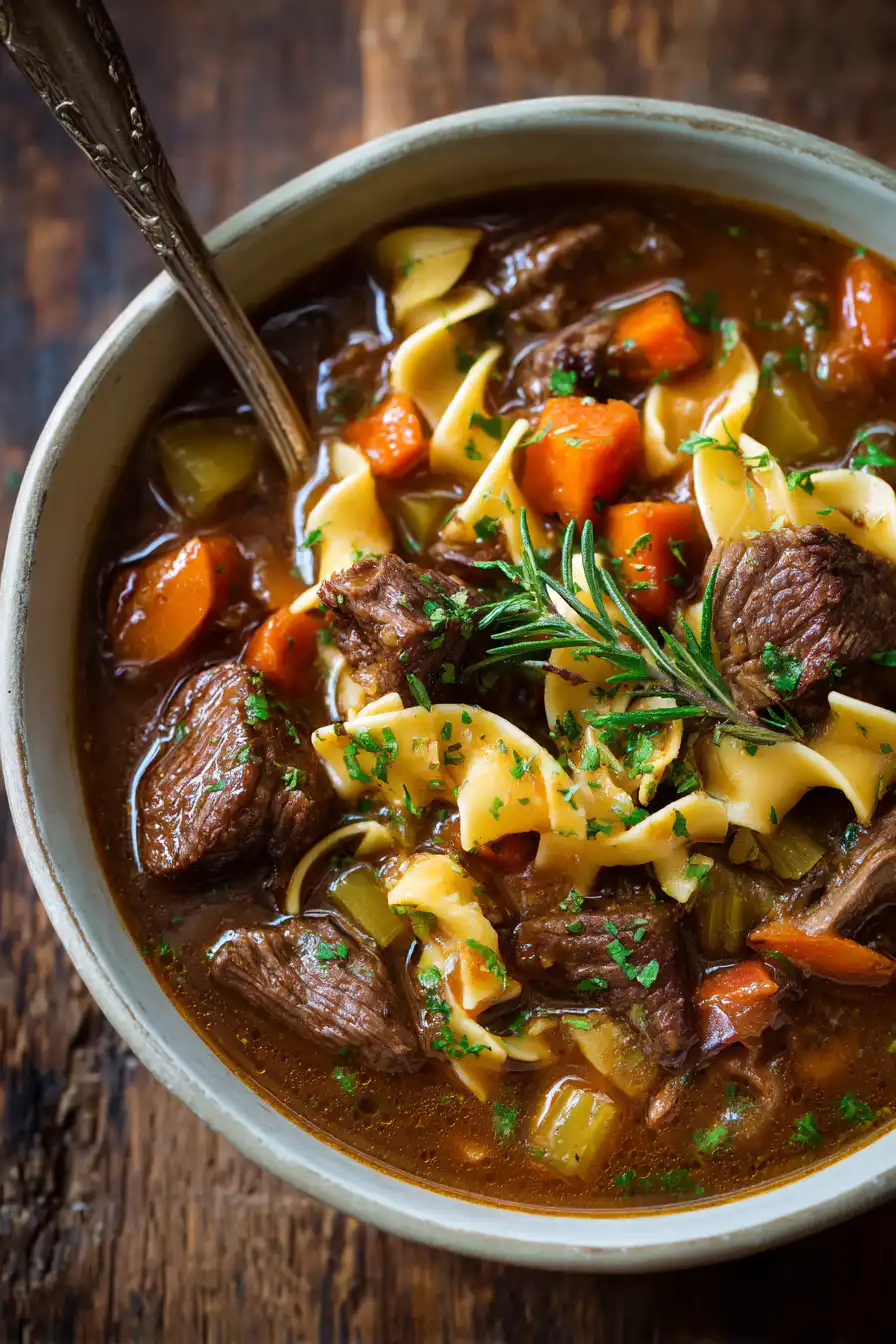
Beef and Noodles Stew is a super hearty meal that really warms you up and tastes amazing. Its loaded with chunks of tender beef, noodles that soak up all the yummy flavors, and lots of veggies all cooked together in a rich, tasty broth. The smell of it cooking will fill your house and bring everyone to the table. There are many different versions around the world, making this dish a favorite for lots of families and a reminder of good times.
This stew became famous because it's simple to make and really comforting. It's perfect for cold nights, big family dinners, or even just a relaxing night in. Apart from tasting great, it's also packed with good nutrients to help keep you healthy. In this article, we will get into the history of Beef and Noodles Stew, where it came from and what it means to different cultures. We will also go over some of the health benefits, list the ingredients you need, and give you a step-by-step recipe with ideas to mix things up a bit. Whether you're just starting out or already pretty good in the kitchen, you'll find something useful here to help make this classic dish your own.
History of Beef and Noodles Stew
Beef and Noodles Stew has been around for a long time and shows how different cooking styles came together. Its roots go back many years when people used meat, veggies and grains in one pot because it was an easy way to feed a family. Some of the first meat and noodle dishes were made in Asia, especially in China, where noodles and broth were super common. As people traveled and traded, these ideas spread and changed in different parts of the world.
In American cooking, this stew got really popular in the early 1900s when filling meals were needed to get through long, cold winters. Many families liked it because it stretched a small amount of ingredients into a big, tasty meal. Different states made their own versions, using local veggies and flavors. For example, in the Midwest you might find extra vegetables that show off the local farming, making the dish both hearty and flavorful.
The stew has a big meaning in many cultures. In places in Asia, it stands for a meal that brings everyone together. In America, it reminds people of home and family traditions and is often made during special get-togethers or just on a quiet night in. Over time, people tweaked the recipe a bit, which shows how flexible and loved this comfort food really is, keeping it a go-to dish in kitchens everywhere.
Nutritional Benefits of Beef and Noodles Stew
Not only is Beef and Noodles Stew super comforting, but it's also a really good source of nutrition. The main things in it - beef, noodles, and different vegetables - all add up to give you a balanced meal.
Beef is packed with protein that helps build muscles and repair them after a hard day. It also gives you vitamins and minerals like iron, zinc, and B vitamins which work together to help your body get energy and keep your immune system strong. Using lean cuts of beef can make the stew even healthier by cutting down on extra fat.
Noodles bring in carbs and a bit more protein. If you use whole grain or veggie-based noodles, you can get extra fiber which is good for your digestion and helps you feel full longer. Veggies like carrots, celery, and onions not only give a lot of flavor but also add vitamins like A, C, and K as well as antioxidants to help you stay healthy.
You can make the stew even better by swapping regular noodles for gluten-free options if you need it or adding even more veggies to boost nutrition. This makes sure that no matter what your diet is like, you can still enjoy all the comfort this meal provides.
Ingredients for Beef and Noodles Stew
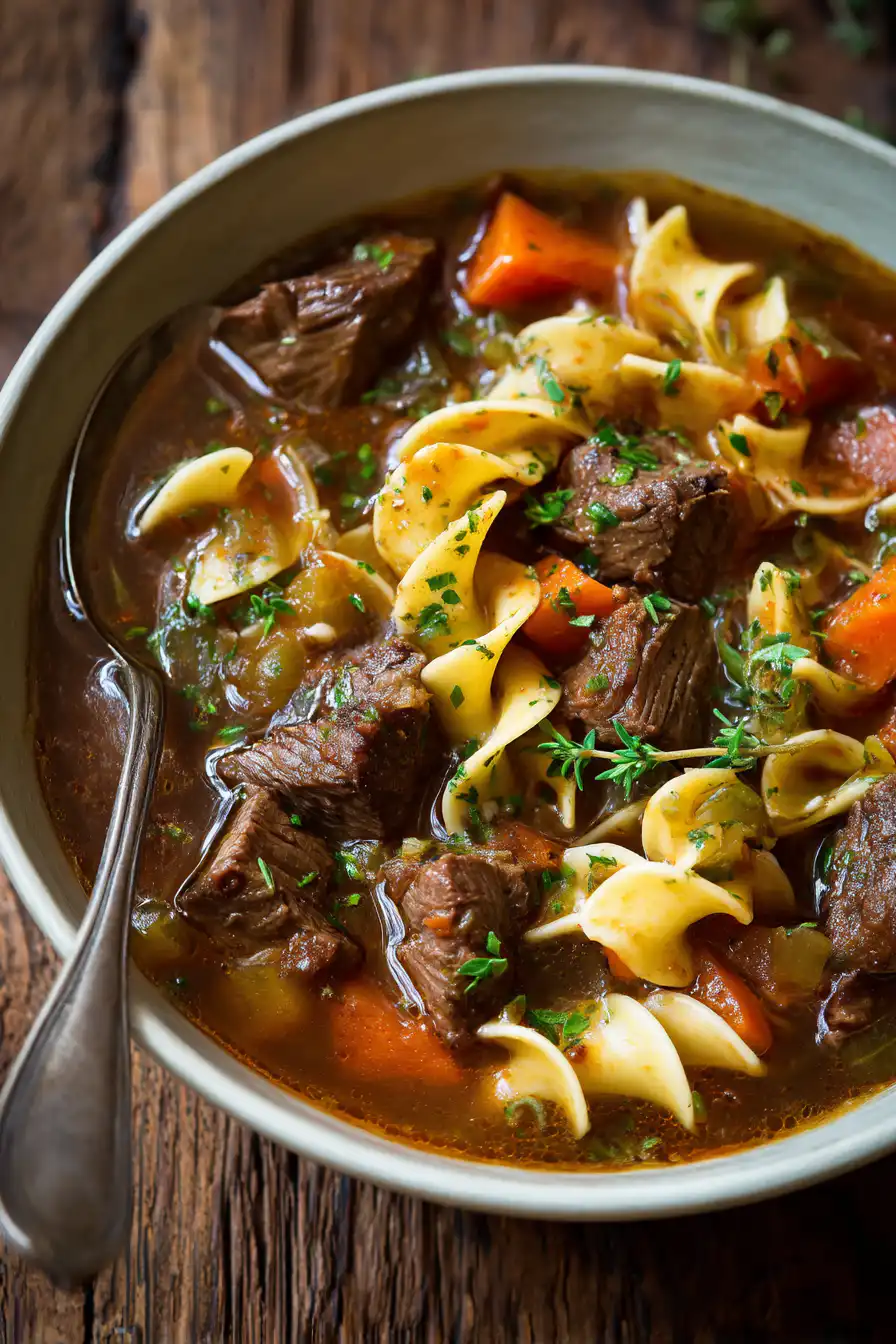
To make a really tasty Beef and Noodles Stew, you gotta choose the right ingredients that build a lot of flavors in the dish. Here's what you mainly need:
- Main Ingredients
- Beef: For the best taste, go with cuts like chuck roast or brisket which get really soft and full of flavor after slow cooking.
- Noodles: You can use different types of noodles based on what you like best. Egg noodles, wide rice noodles, or even whole grain noodles are all great.
- Vegetables:
- Common options: Carrots, onions, and celery are the usual veggies that add taste and nutrients to the stew.
- Seasonal variations: When you can, throw in some extra greens like spinach or kale to add more vitamins.
- Herbs and Spices:
You can make the stew taste even better by adding:
- Bay leaves
- Thyme
- Garlic
- Liquid:
You need a tasty broth to tie it all together. Choices include:
- Beef broth
- Homemade stock
- Optional Add-ins:
To give your stew an extra kick, you might add:
- Beans for more heartiness
- Mushrooms for extra depth
Recipe for Beef and Noodles Stew
Directions
Follow these steps to make your Beef and Noodles Stew:
- Heat some oil in a big pot or Dutch oven over medium-high heat. Add the chunks of beef and brown them on all sides. This usually takes about 5-7 minutes.
- Throw in the chopped onions, carrots, and celery. Cook these for around 4-5 minutes until they start to get soft.
- Add the minced garlic and cook for about one more minute until you can smell it.
- Pour in the beef broth or stock and put the pot on a boil. Make sure you scrape off any browned bits at the bottom so you get all the flavor.
- Add bay leaves, thyme, salt, and pepper. Cover the pot, turn the heat low, and let it simmer for about 1.5 to 2 hours until the beef is really tender.
- Once your beef is nice and soft, stir in the noodles and cook them according to the package, which is usually around 5-7 minutes.
- Before serving, take out the bay leaves. Taste and adjust the salt and peppr as needed then serve it hot.
Expert Advice
Here are some extra tips to help you make the best stew:
- Simmering times: The secret to super tender beef is to cook it on low heat for a long time. If you can, let it simmer a bit longer to get more flavor.
- Common pitfalls: Be careful not to overcook the noodles. Add them at the end so they dont get mushy.
- Suggestions for pairing: Try a glass of red wine if you like, and serve with crusty bread or a simple salad to balance out the meal.
Variations of Beef and Noodles Stew
You can get creative with Beef and Noodles Stew and make it your own. Here are some ways to change it up:
- Different regional takes:
- Asian-inspired: Add a bit of soy sauce, ginger, and even bok choy to give the stew an Asian vibe.
- Italian versions: Mix in some Italian seasoning and tomatoes to get that Mediterranean taste.
- Variations based on dietary needs:
- Gluten-free: Use gluten-free noodles or even zucchini noodles if you need to avoid gluten.
- Vegetarian alternatives: You can skip the beef and use hearty veggies like eggplant or mushrooms instead, and use vegetable broth.
- Flavor twists:
- Spicy versions: If you like heat, sprinkle in some red pepper flakes or even a chopped jalapeño.
- Adding cream for richness: Stirring in a bit of heavy cream or coconut milk at the end can give it a creamy twist.
Storing and Reheating Beef and Noodles Stew
To keep your stew tasting fresh and delicious later on, follow these simple storage and reheating tips:
- Best practices for storing stew:
- Let the stew cool down completely before putting it in airtight containers.
- Store it in the fridge for 3-4 days, or freeze it for up to 3 months.
- How to reheat properly:
- When you're ready to eat it again, reheat it on the stove over low heat and stir every once in a while. If its frozen, let it thaw in the fridge overnight first.
- If the stew gets too thick after storing, just add a splash of broth or water.
- Shelf life and signs of spoilage:
Always look out for any signs that the stew has gone bad. If it smells weird, has a strange texture, or you see any mold, it's best to toss it out.
FAQs about Beef and Noodles Stew
Below are answers to some common questions about this stew:
- Can I use chicken instead of beef? Yeah, you can use chicken for a lighter version. The same steps work fine.
- What type of beef is best for stew? The best cuts are usually chuck roast or brisket because they become really tender with long cooking times.
- How can I thicken the stew? If you want a thicker consistency, mix in a cornstarch slurry or mash some of the veggies and noodles to thicken it up.
- Can I make it in a slow cooker? Absolutely. Just brown the beef and sauté the veggies first then move everything to a slow cooker and let it cook on low for 6-8 hours.
- Is this dish good for freezing? Yes, it freezes pretty well. However, it is best to add the noodles fresh when reheating so they don't become too soft.
Conclusion
In the end, Beef and Noodles Stew is a timeless meal that mixes comfort with good nutrition and a bit of cultural history. Its versatility means you can always switch it up to suit your taste or dietary needs. So, go ahead and try making this stew at home, experiment with different flavors, and share it with people you care about.
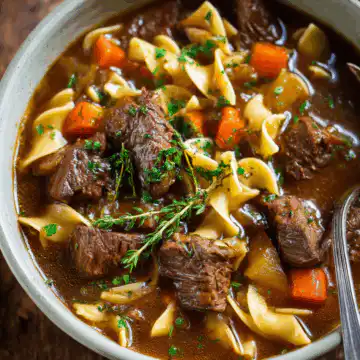
Beef and Noodles Stew
Equipment
- 1 large pot or Dutch oven
- 1 cutting board
- 1 measuring cups and spoons
- 1 wooden spoon or ladle
- 1 bowl for serving
Ingredients
- 1 lb beef chuck, cut into 1-inch cubes
- 2 tablespoons vegetable oil
- 1 medium onion, chopped
- 2 cloves garlic, minced
- 3 medium carrots, sliced
- 2 stalks celery, chopped
- 4 cups beef broth
- 1 cup water
- 1 teaspoon dried thyme
- 1 bay leaf
- Salt and pepper to taste
- 2 cups egg noodles
- Fresh parsley, chopped for garnish
Instructions
- In a large pot or Dutch oven, heat the vegetable oil over medium-high heat. Add the beef cubes and brown on all sides (about 5-7 minutes). Remove the beef from the pot and set aside.
- In the same pot, add the chopped onion and garlic. Sauté for 2-3 minutes until the onion is translucent.
- Add the sliced carrots and chopped celery. Cook for another 5 minutes, stirring occasionally.
- Return the browned beef to the pot. Pour in the beef broth and water, then add the dried thyme, bay leaf, salt, and pepper. Stir to combine.
- Bring the mixture to a boil, then reduce the heat, cover, and let it simmer for about 1 hour. Stir occasionally during this time.
- After 1 hour, add the egg noodles to the pot. Stir well and cook for an additional 10-15 minutes until the noodles are tender.
- Remove the bay leaf, adjust seasoning with more salt and pepper if needed, and serve hot in bowls.
- Garnish with freshly chopped parsley before serving.