Steam curls up from the valve and your stomach starts talking back. You spot the sweet smell of onions slowly turning golden in your kitchen. That buttery scent is kinda tempting, pulling you closer to your pressure cooker like it knows what you're hungry for.

You notice the quiet hiss of the float valve locking in the flavor, sealing the broth depth to keep everything real tender. It's like the cooker's got your back, letting everything cook fast but still taste slow-cooked. You recall how long it takes to get onions that deep caramel color on the stove but your pressure cooker speeds that up without losing the flavor.
Even the pasta's gonna come out with the perfect tender pull. You're excited, 'cause you know this recipe is gonna be creamy, rich, and all kinds of comforting when it's done. That smell's filling your kitchen and you're just about ready to dig in.
What Makes Pressure Cooking Win Every Round
- It seals all that flavor inside with the sealing ring so nothing escapes.
- Cooks onions and pasta way faster than stove-top methods.
- Float valve is a helpful sign showing when the pot's ready to release the pressure.
- Broth depth stays just right for that creamy sauce without getting watery.
- Slow release lets you control the texture so pasta doesn't get mushy.
- Easy cleanup since everything's cooked in one pot, no extra pans to wash.
Get more tips on pressure cooking and flavorful one-pot meals in our Slow Cooker Garlic Butter Beef Bites & Potatoes Recipe and Stuffed Pepper Soup posts for hearty dishes that make your life easier.
The Complete Shopping Rundown
- 4 tablespoons butter for that rich start.
- 4 large sweet onions sliced thin-they caramelize so good.
- 3 cloves garlic minced fresh for a little kick.
- 12 ounces dry spaghetti, your pasta base.
- ½ cup olive oil to keep the sauce smooth and silky.
- 3 egg yolks for that creamy texture without cream.
- 1 & ¼ cups reserved pasta water for the sauce's broth depth.
- ¾ cup grated Parmesan to add salty tang.
- Fresh chopped parsley to sprinkle on top, bright and fresh.

You gotta make sure your onions thinly sliced 'cause they caramelize best that way. The egg yolks are the secret weapon here, bringing creaminess to your pasta without heaviness. Don't skip saving some pasta water since it helps bind everything into a luscious sauce.
For more ingredient ideas and quick grocery tips, check out our detailed Lemon Cream Cheese Bars Recipe and learn how precise shopping sets the stage for success.
How It All Comes Together Step by Step
- First up, melt butter in a large skillet on medium heat. Toss in your thinly sliced onions and let 'em cook, stirring now and then until they're deep caramel in color. This takes about 25-30 minutes but it's worth waiting for that tender pull.
- Add minced garlic and cook for just 1-2 minutes until you can smell it. Don't let it burn! Then pull the skillet off the heat and set aside.
- Meanwhile, bring a big pot of salted water to boil for your spaghetti. Cook pasta till it's al dente, just firm enough when you bite. Reserve exactly 1 & ¼ cups of that starchy cooking water before draining.
- In a small bowl, whisk the egg yolks with a few tablespoons of that reserved pasta water to temper the eggs so they don't scramble later on.
- Bring the skillet with onions back to a low heat spot. Add your cooked spaghetti right in and toss it with those sweet onions.
- Slowly pour in the egg-water mixture, then the rest of the reserved pasta water and olive oil. Toss that pasta quickly so the sauce thickens up into a silky creamy coating.
- Sprinkle grated Parmesan over the pasta and keep tossing till all that cheese melts and makes the sauce smooth. Season with salt and pepper how you like.
- Plate that beauty, add fresh parsley on top for a good pop of green, and serve it up. Your taste buds are gonna thank you.
If you enjoy detailed cooking techniques, you'll appreciate our Mini Chai Muffins with Vanilla Bean Glaze Recipe for a get-it-right step-by-step guide combining flavors and care.
Valve Hacks You Need to Know
- When caramelizing, if your pressure cooker has a saute function, use it to get those onions cooking faster before sealing the pot.
- Know your float valve-it means the cooker's under pressure. Wait for it to drop before opening to keep everything safe and tasty.
- For best sauce texture, try slow release instead of quick letting out steam. It keeps pasta from going mushy and sauce thick enough.
These tricks save you a bunch of hassle and keep your caramelized onion pasta on point. You'll feel kinda like a pro having these valve hacks up your sleeve.
What It Tastes Like Fresh From the Pot
The first bite hits you with deep sweetness from those caramelized onions that turned golden and soft. It's kinda rich but not heavy 'cause the sauce comes from egg yolks and olive oil, gently coating every strand of spaghetti with creamy goodness.
You notice the subtle garlic aroma blending in with salty Parmesan, each bite comforting like an old favorite sweater. The fresh parsley adds a fresh, bright note that lifts the whole dish.
It's like your taste buds got a little party where everything's balanced just right-sweet, savory, creamy, and fresh all mixed in one forkful of yum. You're gonna be thinking about this pasta dinner long after you're done eating.

Making It Last All Week Long
- Keep leftovers in an airtight container in the fridge for about 3-4 days. The sauce thickens up but reheats nice with a splash of water.
- Freezing is an option, but egg yolks can change texture when frozen then thawed. Best eat fresh or refrigerate instead.
- If you reheat, add a little olive oil or reserved pasta water to loosen it up without drying out.
- For a quick lunch, toss leftover pasta into a skillet with some veggies for a speedy stir-fry that tastes great.
With these tips, you won't have to stress about wasting any of that good food you made. Plus, you can enjoy the sauce flavor all week long.
What People Always Ask Me
- Can I skip the egg yolks? You can but the creaminess won't be as rich. The egg yolks give the sauce that silky texture without heaviness.
- What if I don't have sweet onions? Yellow onions work too, just caramelize 'em slower and taste as you go to avoid burning.
- Can I use another pasta type? Sure! Spaghetti works best but penne or fettuccine could do fine as long as you adjust cooking time for broth depth.
- Is it okay to use bottled garlic? Fresh garlic always wins for flavor, but bottled minced garlic can be a quick substitute.
- How do I know when pressure cooker is ready? Watch the float valve rise up; that's your signal the pot's sealed and heating up under pressure.
- What if my pasta sticks together? Toss cooked pasta with little olive oil after draining before mixing to keep strands separated.
Also, for more savory recipes and cooking hacks, check our posts on Stuffed Pepper Soup and Slow Cooker Garlic Butter Beef Bites & Potatoes. They are packed with comfort and delicious flavor as well.
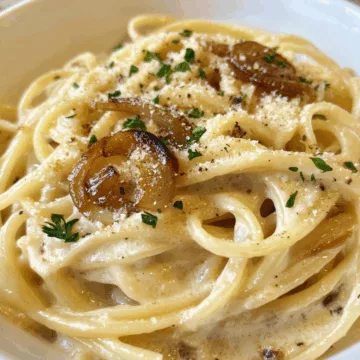
Caramelized Onion Pasta Pressure Cooker Recipe
Equipment
- 1 Skillet Large nonstick
- 1 Pot For boiling pasta
- 1 Bowl For tempering eggs
Ingredients
Main Ingredients
- 4 tablespoons Butter for rich base
- 4 large Sweet onions sliced thin
- 3 cloves Garlic minced
- 12 ounces Dry spaghetti pasta base
- 0.5 cup Olive oil for sauce
- 3 Egg yolks for creamy texture
- 1 ¼ cups Reserved pasta water for sauce consistency
- ¾ cup Grated Parmesan for salty tang
- Salt and pepper to taste
- Fresh chopped parsley for garnish
Instructions
Instructions
- Melt butter in a large skillet over medium heat. Add sliced onions and cook, stirring occasionally, until deep golden and caramelized, about 25–30 minutes.
- Add minced garlic and cook for 1–2 minutes until fragrant. Remove skillet from heat and set aside.
- In a separate pot, cook spaghetti in salted boiling water until al dente. Reserve 1 ¼ cups of pasta water and drain spaghetti.
- Whisk egg yolks with a few tablespoons of reserved pasta water in a bowl to temper.
- Return skillet with onions to low heat. Add cooked spaghetti and toss with onions.
- Add egg-water mixture, remaining pasta water, and olive oil. Toss quickly to coat the pasta with sauce.
- Sprinkle grated Parmesan over pasta and toss until melted and smooth. Season with salt and pepper.
- Plate pasta and garnish with fresh chopped parsley. Serve immediately.